Corporate Housing vs. Hotels in Charlotte: What HR Managers Need to Know
Corporate Housing vs. Hotels in Charlotte: HR Guide
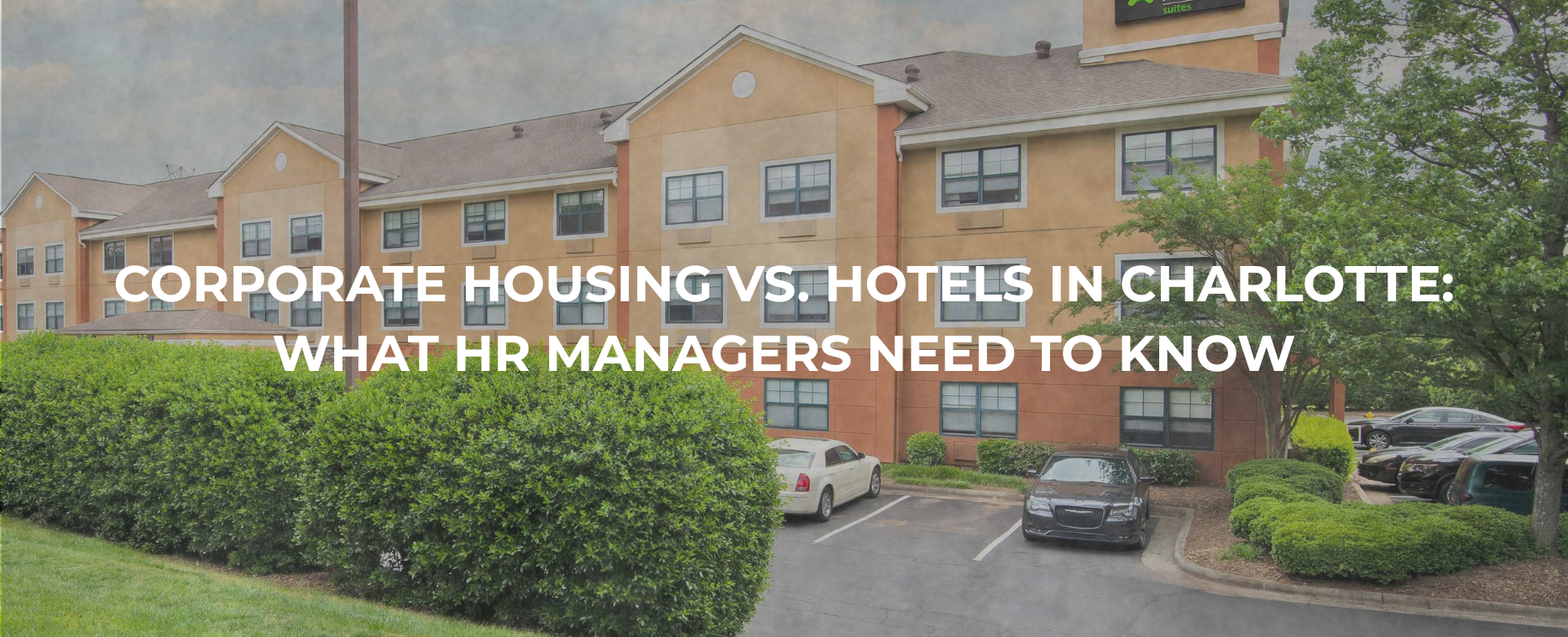
For a relocation lasting longer than a week or two, furnished corporate housing is generally the more cost-effective and livable option compared to an extended hotel stay. Corporate housing consolidates billing into one invoice, gives the employee a real living space with a kitchen instead of a single room, and removes the daily incidentals that add up fast in a hotel. Hotels still make sense for short trips under a week.
How does the cost actually compare?
A hotel's nightly rate rarely tells the whole story. Parking, food, laundry, and incidentals stack on top of it every single day of a multi-week stay. Corporate housing consolidates all of that into one simple monthly bill that HR can budget and approve cleanly, without piecing together a stack of receipts at the end of a relocation. In most corporate relocations lasting a month or more, that one-bill structure is easier to manage than reconciling weeks of hotel folios.
What's actually included in a corporate housing stay?
At Be Relaxed, every unit is furnished, connected, and cleaned before the resident arrives. Utilities are already on. The space includes a full kitchen and living area, not just a bed and a bathroom. That difference matters most for anyone staying long enough to actually want to cook a meal or unwind somewhere that isn't a hotel bed.
Is corporate housing safe and consistent, or does quality vary a lot by provider?
It varies. That's exactly why the provider matters as much as the unit. Be Relaxed is led by Patrick Smith, who founded the company in 2013, alongside GM Eric Guinn, who spent 30 years in corporate relocation, 20 of them running operations at the largest privately held relocation company in the country. That operational experience is what keeps quality and safety consistent across every placement, not just the newest one.
How long does a stay need to be before corporate housing makes sense over a hotel?
As a general rule, once a stay stretches beyond a week or two, corporate housing usually wins on both cost and livability. Shorter trips, a few nights here and there, are still often simpler to book as a hotel. The crossover point depends on the specific relocation, so it's worth asking a housing provider directly rather than assuming either option automatically.
What should HR managers ask before booking corporate housing?
Ask whether the unit is confirmed available right now, not "likely available." Ask how billing works and whether it's truly one invoice. Ask what happens if something breaks mid-stay, and how fast a real person responds. Ask about safety and cleanliness standards. These questions echo the kind of duty-of-care thinking that business travel organizations increasingly ask companies to apply to extended stays, not just single-night trips.
Frequently asked questions
Is corporate housing more expensive than a hotel?
Not usually, for stays longer than a week or two. One consolidated monthly bill typically costs less than nightly hotel rates plus incidentals over the same period.
Do corporate housing units come furnished?
Yes. At Be Relaxed, every unit is move-in ready, furnished, connected, and cleaned before arrival.
Can HR managers get one invoice covering multiple employees?
Yes. Be Relaxed bills through one simple monthly invoice regardless of headcount.
What happens if something breaks during the stay?
A real person responds, not a call center queue.
Does corporate housing work for stays under a month?
It can, though the cost and livability advantage grows the longer the stay runs.
Sources:
GBTA (Global Business Travel Association)
SHRM (Society for Human Resource Management)
Share this post