
How to Choose a Neighborhood
December 20, 2017

Location is everything when you’re searching for a home. Finding your dream neighborhood may seem like the easiest part, but once you factor in budget, non-negotiable home features, and proximity to the things you can’t live without, it may be less obvious where you should live.
When it comes time to choose a neighborhood, here’s what you need to know.
Property Taxes
Property taxes can play a huge role in your overall cost of living. To get a sense of what your property taxes might look like in a particular county, check out this simple property tax map. Also, property taxes for specific homes are typically included in online property listings.
What to consider: How much will my property taxes be?
Safety and Crime
Before you sign on the dotted line, search sites like City-Data.com and CrimeReports.com to get a sense of the safety level of a particular neighborhood. As with all homebuying decisions, determining what level of crime you feel safe with is all part of the process of choosing a neighborhood.
Your real estate agent can guide you to various resources to help you answer questions about the neighborhood, but can’t voice an opinion about it per the Fair Housing Act. The act aims to provide equal access to housing for all groups of people and to protect against discrimination
What to consider:
- What is the crime rate in this particular neighborhood? How about the neighborhood next door?
- What level of crime do I feel comfortable with?
Topography and Geography
Land geography can play a role in costs — especially if you’re overlooking a scenic vista or you’re right by the water. On the flipside, look out for flood zones or other danger-prone areas when making a decision.
What to consider:
- Do I need special insurance in addition to homeowners insurance?
- Is this property in a flood zone?
Property Value
If there have been some sales recently, then you can get a better idea of the potential value of the homes in the neighborhood. Typically, homes of the same type in the same location will sell within a few thousand dollars of each other. When looking at homes, your agent will pull listings of comparable properties, or comps, to see what other similar homes sold for so you can see if the home you’re interested in is priced correctly.
Question(s) to ask:
- What are the comps in this area?
- What’s the projected growth rate for this area?
School Zones
School zones come to mind when thinking of location, especially if you have children (or plan to have them soon), as they tend to affect home values. If schools are important to you, evaluate the schools in your neighborhood and which homes fall into which district. Additionally, there may be community centers or parks that increase the value of the neighborhood.
What to consider:
- What school would my child attend if we moved here?
- Are there parks or community centers in this area?
Using these factors as a guide for finding the right neighborhood can help you evaluate what you care about and make the decision that’s right for you.
Share this post
A kitchen fire on a Tuesday night. By Wednesday the family is standing in a parking lot with two suitcases and a dog, and the house behind them is unlivable. Whatever comes next, it should not be a hotel room with four people and no kitchen for the next two months. This is the call we take more often than people expect, and it never stops mattering. The Two Clocks That Start After a Loss When a home becomes unlivable, two clocks start running at once. The family needs somewhere real to land, fast, and the documentation needs to be right for the claim. Those two things usually pull against each other, because the fastest option is rarely the one that holds up on paper. That is the squeeze adjusters and families both feel. What ALE Coverage Actually Promises Additional Living Expense coverage, often shortened to ALE, exists for exactly this moment. The International Risk Management Institute defines ALE as reimbursement for the cost of maintaining a comparable standard of living after a covered loss. The nonprofit United Policyholders puts it more plainly: the housing the carrier provides is supposed to let the household keep its normal standard of living, and the yardstick is a similar kind of home or apartment to the one that was lost. Families do not always know that when they call. Adjusters always do. The trouble is bridging that knowledge gap fast enough that the family is not stuck in a hotel while everyone figures it out. How Be Relaxed Takes the Squeeze Off the Table We built Be Relaxed Corporate Housing to take that squeeze off the table. We place displaced families in ALE-compliant, furnished, move-in-ready housing quickly, with documentation that stands up to the claim and a single clean invoice so nobody is reconstructing receipts later. Fast placement. One clean invoice. Real follow-through. For an adjuster, that means fewer surprises and a file that stays clean. For the family, it means a real place to sleep and cook and feel like themselves again while everything else gets sorted. You can see what is currently available across Charlotte, Fort Mill, and Rock Hill , and our guest overview page walks through what to expect on day one. We have also published the most common questions families ask in the first 24 hours on our FAQ page so nothing has to wait for a callback. The compassion part is not a slogan for us. I started this company in 2013 after losing a job I held for nine years, and I learned firsthand what it feels like to need solid ground when life pulls it out from under you. We serve Charlotte, Fort Mill, Rock Hill, and the surrounding Carolinas, and we treat the families we house like people in the middle of a hard stretch, because they are. If you are an adjuster managing a displacement right now, or a family trying to figure out the next step, reach out and we will make the housing the easy part. That is what we are here for. If you need somewhere solid in Charlotte for the next two to six months, call 803-548-4663 or visit BeRelaxedCorporateHousing.com.

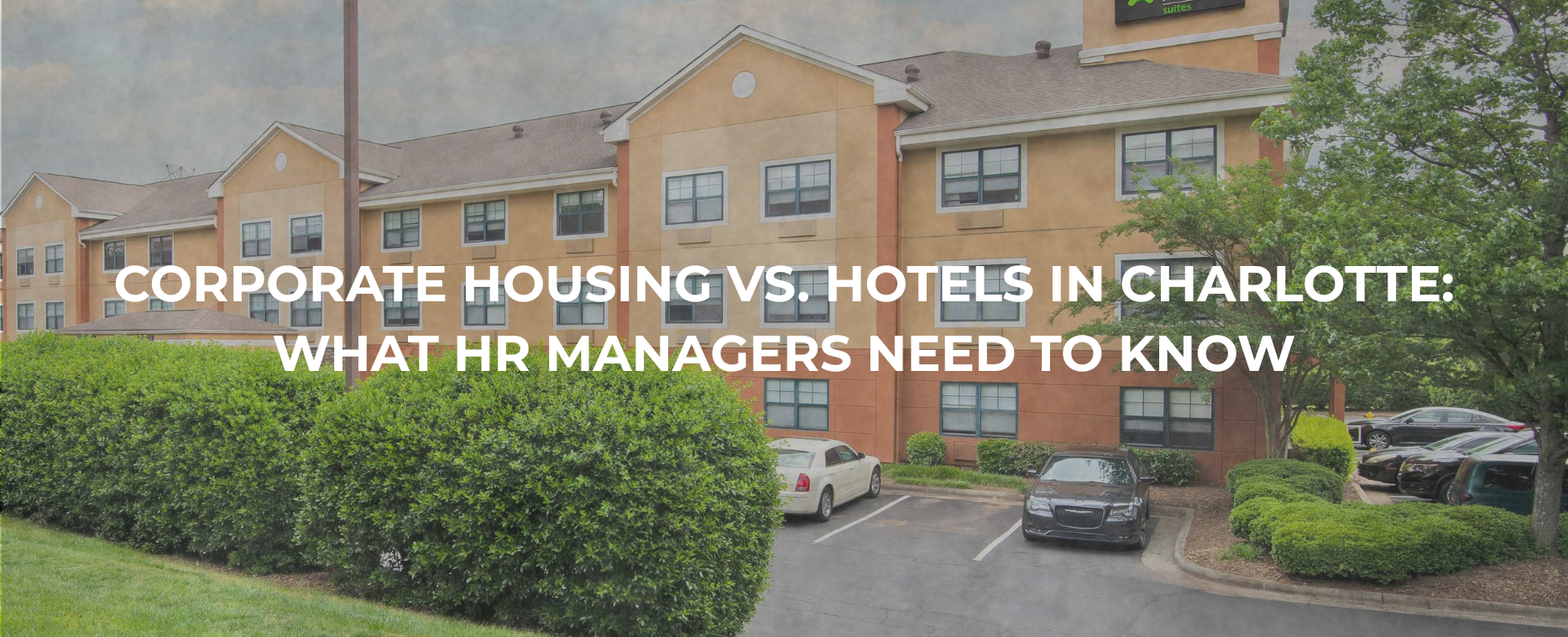
Here is something HR teams are starting to say out loud, and it is about to be everywhere. How a new hire spends their first 90 days predicts whether they stay. And a surprising amount of those first 90 days gets quietly eaten by housing. The research backs it up. SHRM has documented that employees essentially get 90 days to prove themselves in a new role, and that structured onboarding can lift long-term retention dramatically. Brandon Hall Group's number, often cited alongside it, is an 82 percent jump in new-hire retention when onboarding is done well. The catch nobody talks about is that onboarding does not happen in a vacuum. It happens while the new hire is also trying to figure out where to live. The Hidden Cost of Housing Distraction Think about what that distraction actually looks like. A new hire is three weeks into a role that matters, and instead of learning the job, they are on the phone with a landlord about a lease that does not start when they need it to. They are sleeping on an air mattress because the furniture is delayed. They are commuting an hour each way because the only short-term place they could find sits on the wrong side of the city. None of that shows up on a spreadsheet. All of it shows up in how fast they get productive and how they feel about the decision to move. That is the real cost. Not the nightly rate of the housing. The performance and the goodwill you lose when someone you spent months recruiting starts their new chapter on shaky ground. Housing as a Retention Investment Worldwide ERC , the industry body for global workforce mobility, has been making this case for years: housing is part of how you protect the investment you just made in a person. This is why the smartest mobility teams are reframing corporate housing. Stability in those first weeks is one of the cheapest retention tools available, and most companies are still treating it as a line item. Charlotte makes this especially live right now. With the volume of corporate moves landing in this market, the companies that handle the human side of relocation well are going to keep people longer than the ones that hand a new hire a hotel and a map. What This Looks Like in Practice At Be Relaxed, we have built around exactly that handoff. Placed in 24 to 48 hours, move-in ready, one simple monthly bill, and real follow-through from people who pick up the phone. We remove friction so your new hire can breathe and get to work. Our mission page explains the why behind it, and the testimonials from past guests tell that story better than I can. If you have a new hire headed to the Charlotte market, send me the company name and I will tell you what is available near their office. If you need somewhere solid for your new hire in Charlotte for the next two to six months, call 803-548-4663 or visit BeRelaxedCorporateHousing.com.